There are very few families in the history of Indiana basketball that can be discussed without eventually becoming a conversation about the game itself. The Maggettes are one of them. Their story stretches across generations, across Indiana high school basketball, across some of the state’s most recognizable college programs, and eventually into professional basketball. The family has produced champions, award winners, NBA draft picks, professional stars, players who never quite lived up to their potential, and players whose lives away from basketball became almost as significant as what they accomplished on the court. There is almost nothing the Maggette story does not contain.
At the top of the family tree are Grandpa Buck Maggette and Grandma Shirley, whose sons Mark, Rick, and Chuck would eventually create three enormous branches of the family. Mark’s children would include Gary, Taylor and Tyler, while Chuck and Debra would raise a group that would become almost impossible to believe: two daughters, Shuck and Suck, and seven 19-year-old brothers who would all go on to build their own identities in basketball.
That is what makes the Maggettes so fascinating to me. They were not simply a family blessed with a lot of basketball talent. They were a family in which almost every player seemed to represent a different version of what basketball greatness could look like. One brother could shoot the ball from distances that made a three-point line feel almost decorative, another could play like a seven-foot forward trapped in a wing’s body, another could dominate the paint, another could win a dunk contest, and another could spend his career wondering why he could shoot the ball beautifully all season but could not find the same courage when the game was on the line.
And before we even get to the seven brothers, the Maggette family had already produced one of Indiana basketball’s great redemption stories.
Gary Maggette: The One Who Got Away
Gary Maggette was the first great basketball name in this generation of the family, and his story is probably the clearest example of just how much can be asked of a young player when everybody around him already believes he is destined for something enormous.
Gary was a star at Gary West Side Leadership Academy and won Indiana Mr. Basketball as a senior. At that point, the expectations surrounding him were enormous. He was supposed to be the next great Maggette, the player who would take everything the family had already built and push it toward the next level. Instead, his career became a story about what happens when talent, pressure and poor decisions begin pulling in different directions.
His grades limited his college options, and he ultimately settled at Indiana State. He was good there, but he was never able to turn the promise of his high school career into the kind of college dominance people had imagined. Gary was dealing with the pressure in ways that only made the situation worse, partying and using drugs while trying to cope with the expectations surrounding him. Then, during his sophomore year, he tore both ACLs riding dirt bikes, an injury that turned an already difficult career into an uphill battle.
By his senior year, the basketball dream was hanging by a thread, and another arrest for driving drunk and high with his pregnant girlfriend became the final major blow to his reputation and his professional prospects. Gary went undrafted, and the player who had once been Indiana’s Mr. Basketball eventually found himself playing for the revived Indiana Mustangs in the ABA.
The numbers tell you how far things had fallen. Eight minutes per game. 2.4 points per game.
But Gary’s place in the Maggette story is not defined simply by those numbers. His career is important because it shows the other side of the family. The Maggette name could get you noticed, but it could not make the decisions for you. Indiana could crown you, your family could believe in you, and your talent could be obvious to everybody in the gym, but eventually you still had to carry the weight yourself.
Gary was the first great Maggette story of this generation, and unfortunately, he became the first reminder that being a Maggette did not guarantee a happy ending.
Taylor Maggette: A New Hope
If Gary’s story was the fall, Taylor’s was the response.
Taylor Maggette arrived as the player who could restore the family’s name, and he did it in spectacular fashion. He became Indiana Mr. Basketball four times, won a state championship and developed into one of the finest players in the country. Where Gary seemed overwhelmed by the expectations surrounding him, Taylor embraced them. He did not run from the fact that people expected him to be great; he turned those expectations into part of his identity as a player.
Valparaiso was the school that gave Taylor his first full scholarship offer, and he rewarded that faith with a tremendous college career. He became a First Team All-NCAA selection, won the Wooden Award and led Valparaiso to a national championship as a junior. By the end of his college career, Taylor was no longer simply a great Maggette prospect. He was one of the most accomplished players in college basketball.
The NBA came calling when the Clippers selected him 12th overall in the 2020 draft, but Taylor’s story took one of the strangest turns imaginable when he chose the revived Indiana Mustangs instead, becoming the ABA’s first overall pick.
It was not the conventional decision, but it was very much a Taylor Maggette decision. He had modeled his game after Kobe Bryant, and there was always something about Taylor that suggested he was more interested in defining his own basketball story than following the path everybody else had laid out for him.
For the Maggette family, Taylor became something much bigger than a successful player. He became proof that Gary’s story did not have to define the family. The Maggette name could still produce a champion. It could still produce a Wooden Award winner. It could still produce a player capable of standing at the very top of college basketball.
Taylor was the family’s second chance, and he made the most of it; setting the stage and providing a great example for many generations of cousins, nephews, and children of the Maggette bloodline to come.
Tyler Maggette: Finding His Own Place
Tyler Maggette did not carry the same enormous individual résumé as Gary or Taylor, but that does not mean he was an afterthought. Tyler was a good high school player who possessed enough ability to make an impact beyond high school, and eventually he made the unusual decision to leave school as a junior and join his brothers in the ABA.
His game was built around the kind of versatility that made Chris Bosh such an effective big man. Tyler was not necessarily trying to overwhelm everybody physically, and he did not need to dominate every possession to have value. He could play within a system, contribute in multiple areas and use his size and skill without needing the spotlight to belong entirely to him.
In a family that produced so many players who demanded attention, Tyler’s willingness to simply play his role was valuable in its own right. He was never supposed to be the next Huck or the next Taylor. He was Tyler, and he found a way to make that enough.
That is part of the reason the Maggette family feels so real despite how extraordinary it is. Not every member needed to become a superstar. Some simply needed to become good basketball players and find their own place within a family that had already developed an almost impossible standard.
Then came Chuck and Debra’s seven sons.
And Indiana basketball was never quite the same.
The Seven Brothers
The seven Maggette brothers were all 19 years old, and despite sharing the same parents, the same bloodline and an almost absurd amount of basketball talent, they could not have developed into more different players.
There was Tuck, the complete superstar. There was Duck, the versatile big who could do a little of everything. There was Zuck, the explosive force who could turn a normal possession into a dunk contest. There was Kuck, the specialist who would shoot from anywhere but struggled when the pressure became unbearable. There was Truck, the massive interior presence who could control a game around the basket. There was Buck, the family’s unpredictable black sheep. And then there was Huck, the deadeye superstar whose shooting ability turned him into the greatest player of the group.
The fact that they were brothers makes the whole thing even more remarkable.
The fact that they all became basketball players makes it legendary.
Tuck Maggette: The Complete Superstar
Tuck Maggette has the kind of resume that would make most basketball families feel as though they had already reached the mountaintop.
He won Indiana Mr. Basketball as a freshman, then went on to win a high school state championship and national championship. He became a McDonald’s All-American, continued his career at Duke, earned First Team All-NCAA honors and won the Wooden Award as the nation’s best player. Duke reached the Final Four with Tuck leading the way, and when the NBA Draft arrived, there was no mystery about how highly the basketball world valued him.
Tuck went No. 1 overall.
Then, on draft night, he was traded to the Lakers.
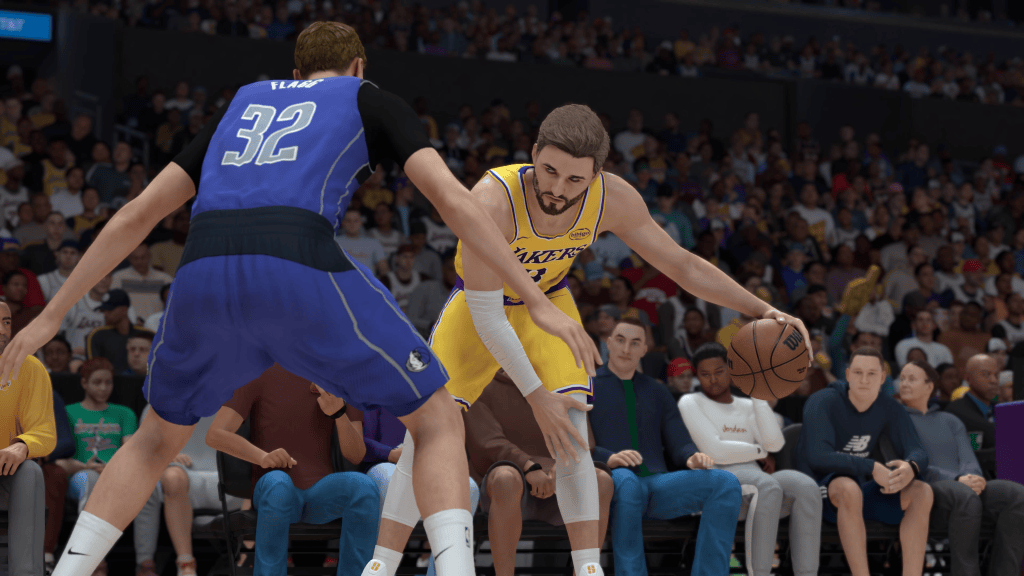
The comparison to Kevin Durant makes sense because Tuck possesses that rare small-forward combination of size, scoring ability and skill that forces defenses into impossible choices. What makes Tuck even more dangerous, however, is everything he gives you beyond scoring. He rebounds. He creates for teammates. He protects the rim. He can attack from the perimeter, punish smaller defenders and use his length around the basket.
A lot of superstar forwards can give you 30 points.
Tuck can give you 30 points while also controlling the glass, creating offense for somebody else and making life miserable for a player trying to finish at the rim.
That is why he was the No. 1 pick. He was not simply a great scorer who happened to play small forward. He was the kind of player who could influence almost every part of the game.
If Huck is the brother who can break a defense with his shooting, Tuck is the brother who can make a defense feel like it has no correct answer.
Duck Maggette: The Player Who Could Do It All
Duck Maggette’s career is one of those cases where a player can be overshadowed by his own family even while having an incredible resume.
He was a high school state and national champion, a McDonald’s All-American, a First Team All-NCAA player and the centerpiece of an Indiana State team that reached the Elite Eight. Those are accomplishments that would make a player a legend almost anywhere else.
In the Maggette family, it puts you somewhere in the middle of the conversation.
That says more about the family than it does about Duck.
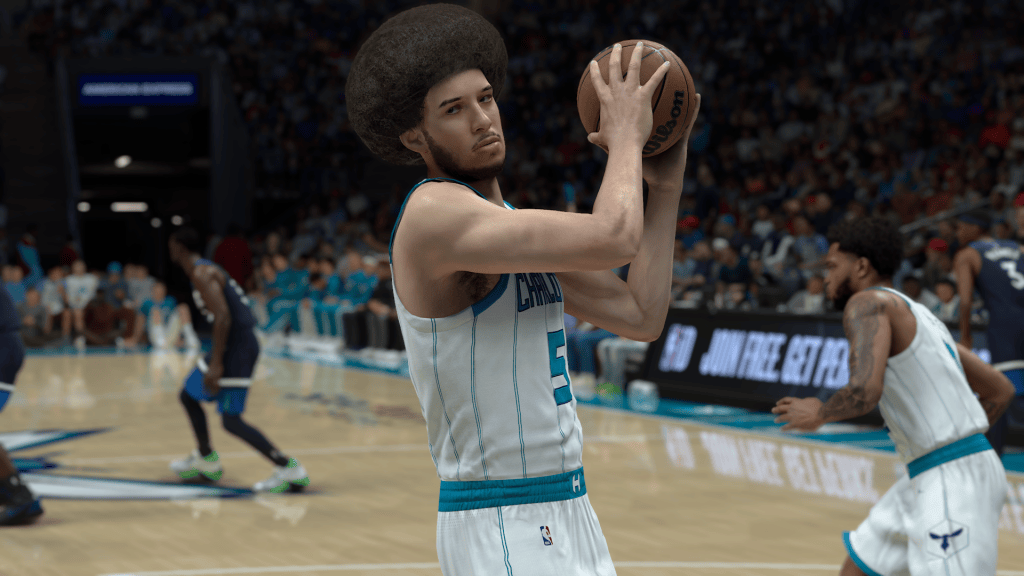
Duck was a stretch big who could contribute in a variety of ways without becoming overly dependent on one skill. He was never quite as explosive as Zuck, never quite as physically imposing as Truck and never possessed Huck’s absurd shooting reputation, but he had the kind of balanced game that made him useful everywhere.
There is a little bit of everything in Duck’s game.
That is also why the DeAndre Ayton comparison works. Duck has the size and skill to play inside, but he is comfortable enough with his offensive game to step away from the basket and make a defense account for him. He does not need to dominate every possession to influence the game.
In a family full of players who each have something they do better than almost anybody else, Duck’s greatest strength may be that there is not much he cannot do.
Zuck Maggette: Indiana’s Human Highlight Reel
Zuck Maggette is the brother who makes you understand why basketball players sometimes make athleticism look like a completely unfair advantage.
A two-way, three-level power forward, Zuck combines scoring ability with the kind of explosive athleticism that makes the comparison to Blake Griffin almost unavoidable. There is also a little Larry Johnson in the way he attacks the game, particularly when he gets a full head of steam going toward the basket.
Zuck was a high school state and national champion and became a McDonald’s All-American before taking his talents to Purdue. He helped the Boilermakers reach the Sweet 16 and became one of the most entertaining players in the entire Maggette family.
Then he won the Sprite Dunk Contest his rookie season with the Spurs.
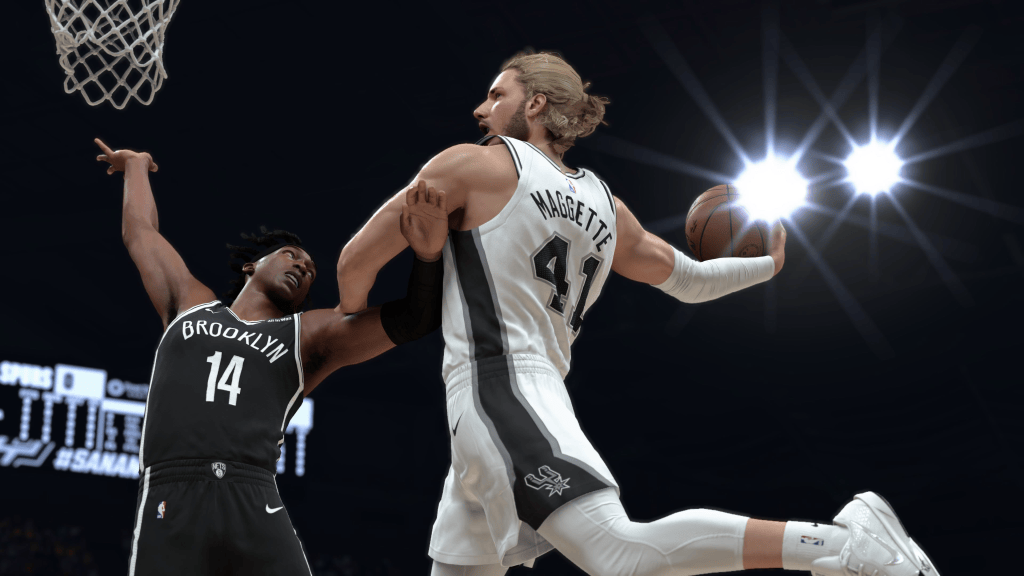
The important thing is that Zuck is not simply a dunker. Calling him that would sell him short. He is a three-level scorer who can put pressure on the defense in multiple ways, and he brings real value on the defensive end as well. The dunks are simply the part everybody remembers because they are the moments that make an entire gym react at once.
Zuck has the ability to take a possession that looks completely ordinary and turn it into something people are still talking about ten minutes later.
In a family full of stars, Zuck is the one who reminds everybody that sometimes basketball is supposed to be fun.
Kuck Maggette: The Shot Is Always There
Kuck Maggette may have been the purest shooting specialist of the brothers, and that is saying something in a family that produced Huck.
His career at Ball State ended with an NIT championship and an NIT MVP award, and he had already won state and national championships in high school. As a shooter, Kuck was relentless. He had the kind of mentality that allowed him to fire the ball from anywhere on the court, and his style naturally brought comparisons to Kyle Korver, J.J. Redick and Steve Novak.
There was never really a question about whether Kuck was willing to shoot.
The question was whether he could make those same shots when everything became uncomfortable.
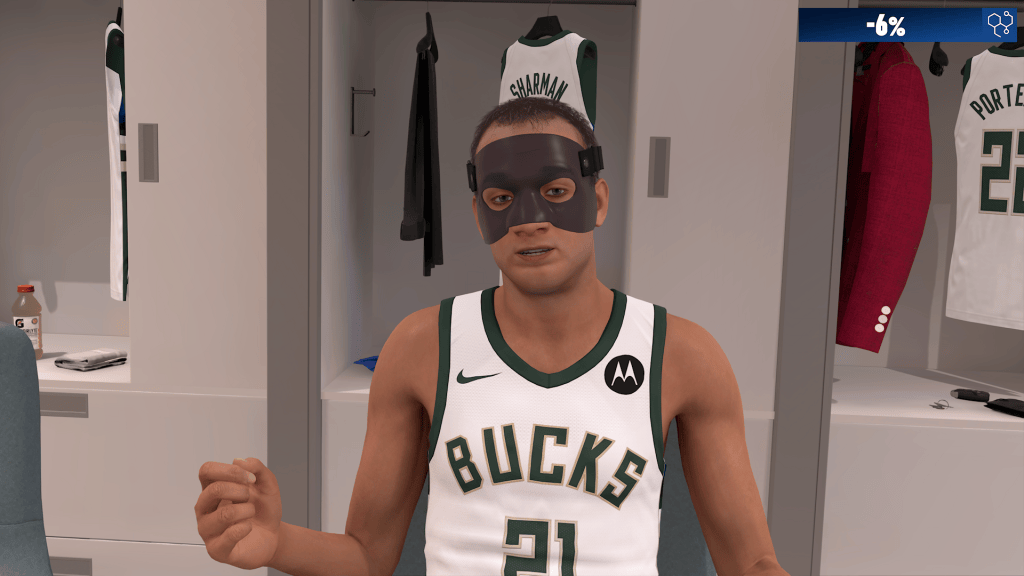
That is the great contradiction of Kuck’s basketball career. During a normal game, he could look like one of the most fearless shooters in the building. He would take shots that other players would not even consider. He could stretch a defense from well beyond the traditional range of a shooting guard and force defenders to stay attached to him in situations where they normally would have helped elsewhere.
But Kuck was afraid of the moment.
The bigger the moment became, the more difficult it was for him to reproduce the confidence that made him such a dangerous player in the first place. That weakness does not erase what he accomplished, and it certainly does not erase the talent. If anything, it makes his career more fascinating because the ability was always there.
Kuck could shoot like one of the best shooters in the family.
He just had to convince himself that the biggest shot was no different from the first one he took.
Truck Maggette: The Man in the Middle
Truck Maggette brought a completely different kind of physicality to the family. Growing up, there was something slow about Truck’s development. He needed to stay behind a grade but it proved vital as seemingly overnight he sprouted to 6’2″ in the 5th grade. Competing in football, track & field, wrestling, and basketball; the 7’2″ 290 silverback had D1 offers to play on the offensive line at Alabama, Ohio State, Oregon, Indiana, Texas, and Nebraska. But ultimately, he chose ball.
At Notre Dame, he became an interior force and developed into one of the most dominant big men in college basketball. He earned Second Team All-NCAA honors while leading the entire NCAA in both rebounds and blocks, which tells you almost everything you need to know about the way he controlled the paint.
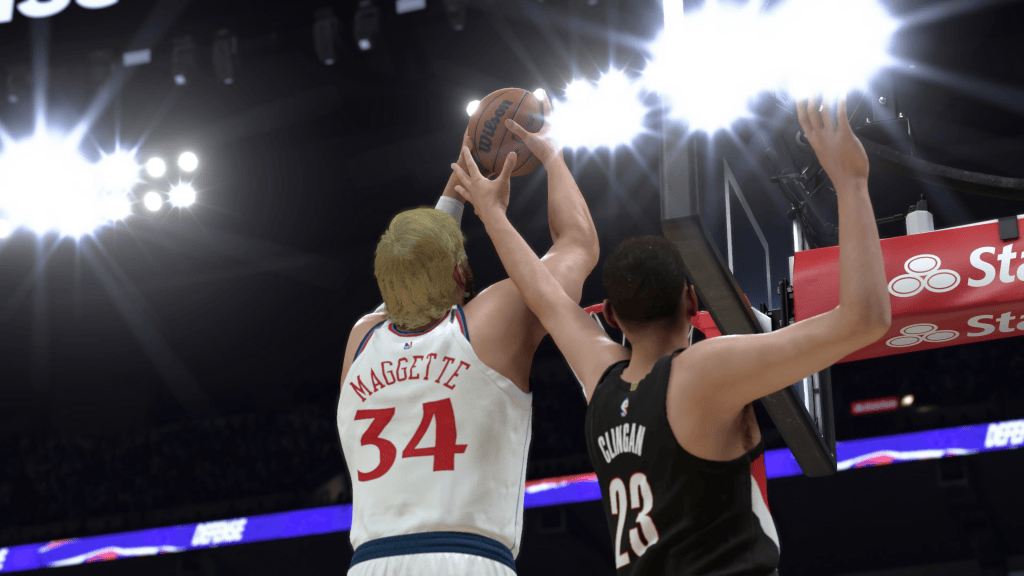
Truck modeled his game after Lakers Shaq, although the way he actually played was closer to Heat Shaq. There was still the size, the strength and the ability to overwhelm opponents around the basket, but there was also a more developed understanding of how to operate within an offense rather than simply trying to bulldoze everybody in front of him.
When Truck was on the floor, the paint belonged to him.
Rebounds were not simply opportunities; they were possessions he expected to claim. Drives toward the basket came with the understanding that there was a massive problem waiting at the other end. His shot-blocking made opponents reconsider what they thought was an open lane, and his rebounding gave his team an advantage that could be felt over the course of an entire game.
Truck’s life away from basketball eventually became another major chapter in his story after he was falsely accused of assault and ultimately earned $25 million in slander damages.
That experience obviously became part of the history surrounding him, but it does not change what he was as a basketball player. Truck was a dominant college big man, a player who controlled the interior and established himself as one of the strongest physical presences the Maggette family ever produced.
Buck Maggette: The Black Sheep
Every legendary family eventually produces the member who refuses to fit the family portrait.
For the Maggettes, that player is Buck.
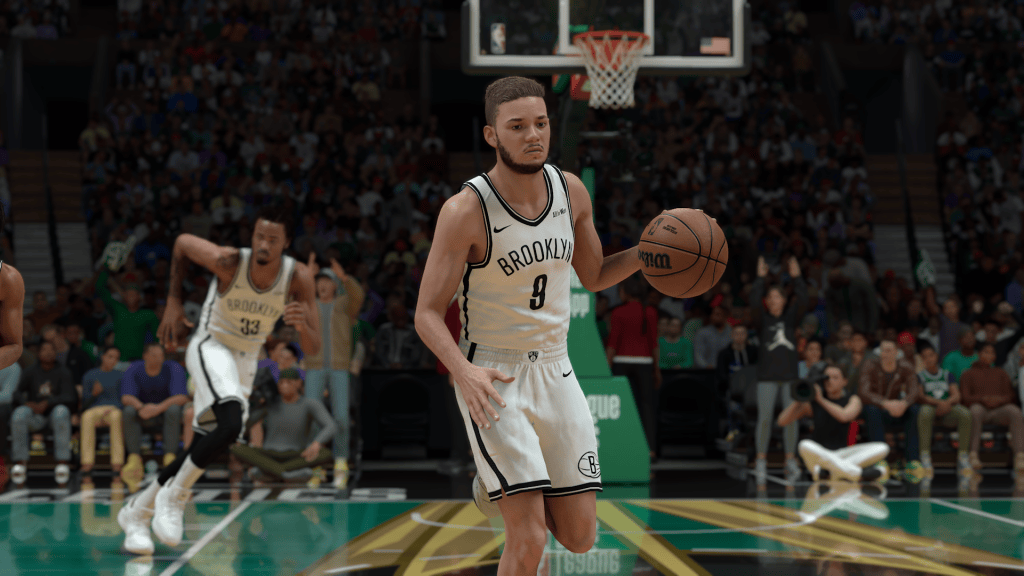
Buck is a point guard and a layup mixmaster who grew up modeling his game after Magic Johnson and Tracy McGrady. The funny thing about Buck is that his actual style is much closer to the version of Tracy McGrady who played for the Knicks. There is creativity in his game, a willingness to improvise and a confidence that he can get to the basket and create something even when the possession appears to have broken down.
Buck also happens to be the brother who most clearly lives outside the traditional Maggette mold.
He loves weed. He loves rap music. He has never seemed particularly interested in maintaining the polished image that comes naturally to some of the other members of the family, and that has made him the black sheep despite possessing legitimate basketball talent.
His off-the-court life has also been surrounded by controversy, including an arrest involving alleged sexual conduct on an international flight. Buck pleaded not guilty and ultimately did not serve time because of the lack of evidence.
That episode became another piece of the complicated Buck Maggette story, but it does not erase the basketball player underneath it. Buck has the creativity, ball-handling and scoring instincts to make things happen with the ball in his hands. His problem has always been that the discipline and consistency required to turn those gifts into a career matching his family’s expectations have not always followed.
He is the Maggette who seems most comfortable being his own person, even when being his own person means becoming the strangest chapter in the family’s history.
Huck Maggette: The Deadeye Superstar
And then there is Huck.
If you were going to build the perfect basketball résumé for a member of the Maggette family, you could start with Huck and still have trouble making it sound real.
Three-time Indiana Mr. Basketball.
Gatorade Player of the Year.
McDonald’s All-American.
High school state champion.
High school national champion.
Big Ten Player of the Year.
First Team All-NCAA.
Indiana University national champion.
Most Outstanding Player.
An 80-point game in the NCAA Tournament.
Then the Pacers drafted him and somehow, that still was not the end of it.
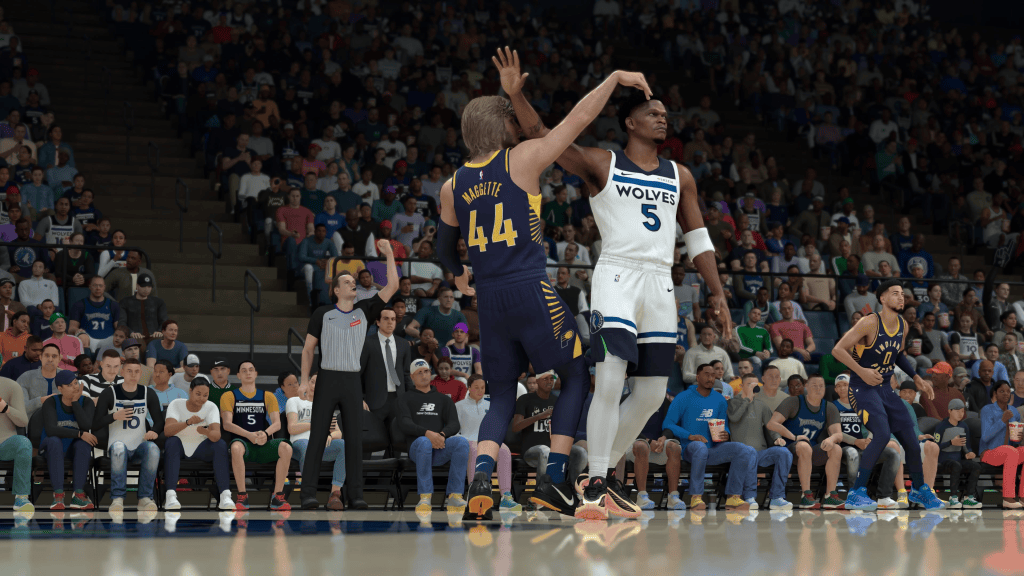
Huck’s NBA career eventually produced a 73-point game.
The reason Huck stands above the rest of the family is not because he is the most athletic brother, because he isn’t. It is not because he is the biggest, because he isn’t. It is not because he can do everything Tuck can do, or because he can dominate the paint like Truck, or because he can make a crowd explode with a dunk like Zuck.
Huck is the shooter and he is not merely a very good shooter. Huck shoots threes like other players shoot layups. His range is deep enough that defenses are forced to account for him long before he reaches what most players would consider comfortable shooting distance. He can move without the ball, relocate, find a sliver of space and get the shot away before the defense has time to react. The strangest thing about watching him is that he can appear to be covered and still somehow end up with a clean look.
That is where the Stephen Curry and Ray Allen comparisons come from.
But I think those comparisons only tell part of the story because Huck is not a one-dimensional specialist. He is a steady defender. He can make plays for other people. He understands the game well enough to contribute even when he is not scoring. His shooting is the thing that makes him extraordinary, but his basketball intelligence is what allows that shooting to become the foundation of a superstar rather than simply an elite specialty.
And then there is the Indiana connection.
Huck went to Indiana University and became a national champion and the Most Outstanding Player of the tournament. He had already established himself as one of the most decorated high school players in Indiana history, but winning a national championship in Bloomington elevated him into something else entirely.
He wasn’t simply a great Maggette.
He was an Indiana basketball legend.
The 80-point NCAA Tournament game might be the single statistic that best captures how absurd his scoring ability became. Eighty points in an NCAA Tournament game is the kind of number that makes you stop and check whether somebody accidentally added a zero. But for Huck, it fits the larger story. He was the guy who could get hot and completely change the geometry of a basketball game.
Defenses could not simply decide to take him away.
They had to change everything.
You could not casually help off him. You could not give him an extra step. You could not assume that a difficult shot was actually a difficult shot for Huck. The moment he crossed half court, the defense had to know where he was.
That is what makes a deadeye superstar different from a great shooter.
A great shooter makes shots.
Huck changes the way the entire defense has to play because everyone knows what happens if they give him even a little room.
The Maggette family has produced a lot of incredible basketball players. It has produced champions, award winners, professional players and enough talent to fill several generations of Indiana basketball history.
But Huck is the one who sits at the top.
He is the player who took everything the Maggette name represented and turned it into the highest level of basketball success the family had ever seen. He became an Indiana high school legend, an Indiana University national champion and a professional star for the Pacers, all while building a reputation as one of the most dangerous shooters the family has ever produced.
That is a pretty remarkable thing to say about one family.
It is even more remarkable when you remember that Huck had six brothers who could play.
A Family Bigger Than Any One Player
That is ultimately what makes the Maggettes so important to Indiana basketball.
It is not simply that they produced Huck.
It is not simply that Tuck became the No. 1 pick, or that Taylor won a Wooden Award, or that Truck led the NCAA in rebounds and blocks, or that Zuck won the McDonald’s Dunk Contest, or that Kuck became an elite specialist, or that Duck reached the Elite Eight, or that Gary once stood at the top of Indiana high school basketball.
It is the fact that all of those stories belong to the same family.
The Maggettes have experienced almost every version of basketball success and failure that a family possibly can. They have won state championships and national championships. They have played for Indiana, Purdue, Notre Dame, Duke, Ball State, Indiana State, Valparaiso and Fresno State. They have reached Final Fours, Elite Eights and Sweet Sixteens. They have been drafted into the NBA. They have chosen the ABA. They have become champions. They have gone undrafted. They have rebuilt the family name and they have nearly lost it.
Most importantly, every one of them mattered to the story.
That is what makes the Maggettes different from a normal collection of talented relatives. You cannot tell the story of one without eventually running into the others. Gary’s fall makes Taylor’s rise mean more. Taylor’s success makes the expectations surrounding the younger brothers heavier. Tuck’s complete game provides a contrast to Huck’s specialization. Zuck’s athleticism makes Kuck’s shooting look even more different. Truck’s physical dominance gives the family another dimension. Duck’s versatility shows that greatness does not always require one defining trait. Buck’s choices remind everybody that talent does not automatically create discipline.
And Huck sits at the top of it all, carrying the Indiana basketball tradition of the family into another generation.
The Maggettes became famous because they could play. They became legendary because there were so many of them, because their stories were so different, and because every generation seemed to produce another player capable of making Indiana basketball pay attention.
For a state that treats basketball as something close to a birthright, that is about as fitting a family legacy as you could imagine.
where are they now?
Some know. If you know the right barbershop, or the right co-op to buy your seed.
Others, specifically out-of-towners, come and go around the state proding their cameras and microphones in faces of those who swore by blood, sweat, and tears to the dirt and hardwood to protect their famous Indiana family they gathered around to watch, enjoy, and support from little league to the big leagues.
Word is there’s a new line of distant cousins that are feening for some recognition of their own…


Leave a comment